Getting from A to B shouldn’t be a luxury. Yet for many cities worldwide, transport systems are quietly determining who gets ahead, and who gets left behind.
From the bus route that doesn’t reach your neighbourhood to the train station without a working elevator, these aren’t just minor inconveniences. They’re barriers that keep people from jobs, healthcare, and opportunity.
Here’s the thing: we can’t solve climate change without solving inequality, and transport sits at the heart of both. The SDG’s recognise this interconnection, while SDG 13 (Climate Action) pushes cities to reduce emissions, SDG 10 (Reduced Inequalities) reminds us that progress must benefit everyone. When we build greener cities, we have a choice. We can create systems that work for everyone, or we can unintentionally build one where only a handful of the population benefit.
When “Smart” Isn’t Smart for Everyone
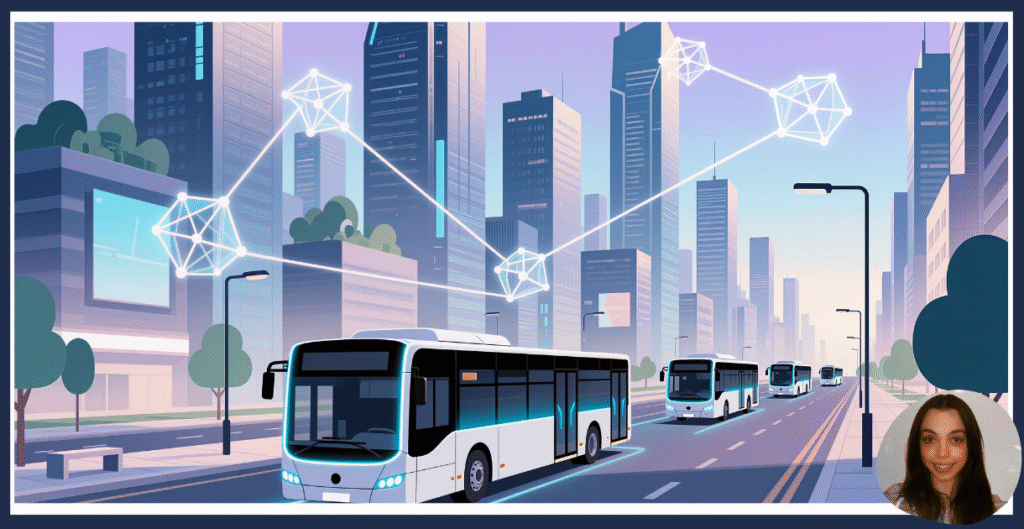
Cities are going digital, and on paper it sounds great. From apps that tell you when the next bus arrives, automated vehicles that could revolutionise travelling, to AI systems optimising traffic flow. But there’s a catch: not everyone has a smartphone, not everyone can navigate complex apps, and not everyone can afford the latest technology.
This digital divide isn’t just frustrating; it’s creating new forms of exclusion. When transport systems rely heavily on technology, they can leave behind the very people who need public transport most: low-income families, elderly residents, and people with disabilities. This reveals a critical trade-off, advancing SDG 11 (Sustainable Cities) and SDG 13 (Climate Action) can inadvertently undermine SDG 10 (Reduced Inequalities).
Take electric vehicles as an example. They’re crucial for cutting emissions, but for disabled people trying to adopt this greener option, the barriers are prevalent. More than half say the costs and limited availability are deal-breakers. Electric wheelchair-accessible vehicles are often poorly designed, difficult to repair, and in short supply.
Meanwhile, 65% of disabled people rely on mobile apps to plan their journeys. When those apps aren’t designed with everyone in mind, or when infrastructure itself lacks elevators or ramps, the whole system fails.
Building Systems That Actually Work for Everyone
So, what does fair transport look like? Some solutions are already working. Discounted fares help. But real change goes deeper. In many low-income countries, informal transport, minibuses, motorcycle taxis, informal bus routes, provides up to 90% of how people actually get around. Banning these services sounds tidy on paper, but it’s detrimental to livelihoods and leaves people stranded. This directly contradicts SDG 1 (No Poverty) and SDG 8 (Decent Work). The smarter approach? Bring them into the framework with proper regulation, safety training, and financial support.
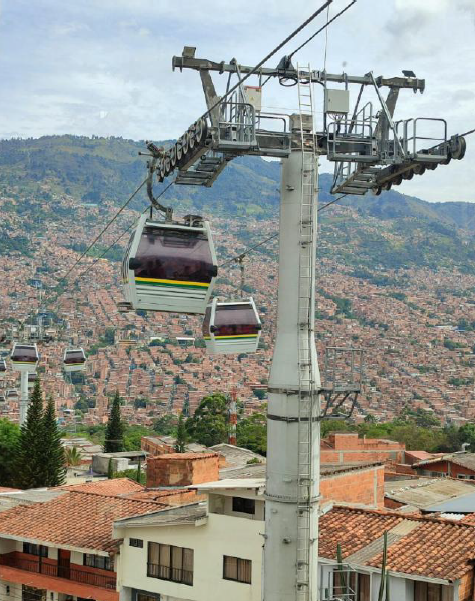
Medellín, Colombia, offers a powerful example of infrastructure shaped by listening to its citizens. The city introduced cable cars, known as Metrocables (Figure 1), to connect hillside informal settlements with the city center. This innovation reflects a shift from imposing traditional transit solutions, to designing around how people actually live. Rather than prioritising buses or trains, planners identified the mode of transport most effective for their communities, creating a system that responds directly to local needs.
Additionally, real accessibility means seamless connections: the ability to easily hop off a bus, onto a train, switch to a ferry if needed, etc. For rural and suburban areas where traditional public transport doesn’t make sense, on-demand services and micro-transit fill the gaps.
Making Technology Work for Everyone
Technology is a critical tool for addressing the climate crisis. And like any tool, it’s only as good as how we use it. Electric vehicles and autonomous transport could genuinely improve lives, especially for people with mobility challenges, if we design them right from the start.
That means clear signage everyone can read, apps that are easy to navigate, and vehicles that accommodate wheelchairs without expensive custom modifications. These shouldn’t be add-ons or nice-to-haves, but the baseline. When technology is designed inclusively, it can simultaneously advance SDG’s. In particular, SDG 9 (Innovation and Infrastructure), SDG 13 (Climate Action), and SDG 10 (Reduced Inequalities), proving these goals don’t have to compete.
Reaching these goals requires collaboration. Not just technology companies and governments communicating, but listening to the communities who’ll use these systems. The people navigating cities with wheelchairs, raising families on tight budgets, working multiple jobs, they’re the ones who’ve seen firsthand what works and what doesn’t.
The future of urban transport doesn’t have to be a choice between saving the planet and being inclusive. It can be both. But only if we design systems where accessibility, isn’t an afterthought; where affordability is embedded from the start; and where the voices of those most affected are directly involved in shaping the solutions.
That’s not just good ethics. It’s the only way sustainable transport can fully become sustainable.