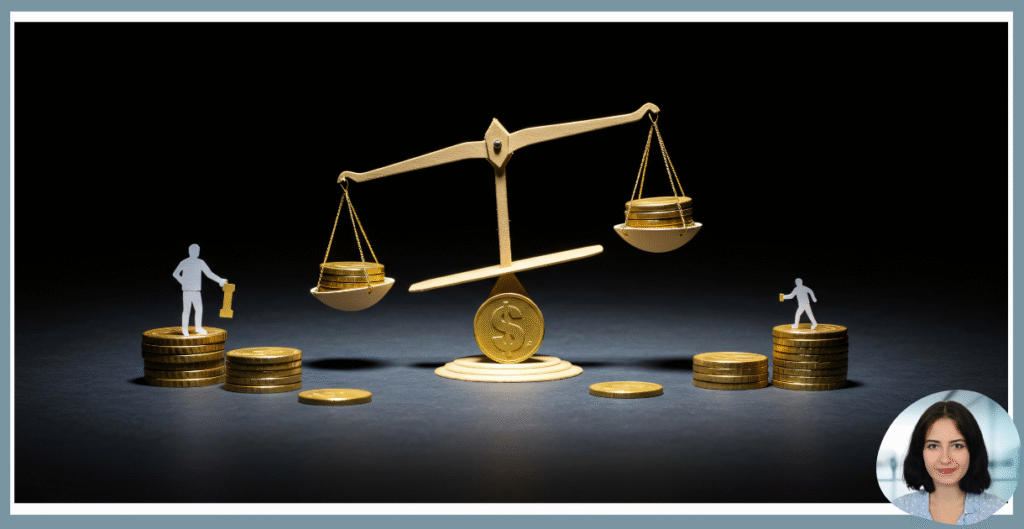
Despite unprecedented technological progress, millions of young people still grow up in environments where opportunity is shaped not by talent, but by gender, ethnicity, disability, migration status, or socioeconomic background. Social inequality continues to determine who succeeds and who struggles. At the halfway point to the 2030 Agenda, SDG 10 reminds us that reducing inequality is not a distant aspiration; it is a necessary foundation for fair societies. To close these divides, we must examine the evidence, understand the causes, and act on solutions already within reach.
The Landscape of Social Inequality: What the Data Shows
Social inequality takes many forms, but it consistently produces unequal life chances. Key indicators reveal how deeply these divisions run.
Education and Digital Access
- Education: UNESCO’s 2024 Global Education Monitoring Report confirms that 251 million children and youth remain out of school worldwide. Wealth is the defining barrier: the UN SDG Report shows that in low-income countries, only 34% of children from the poorest households complete primary school, compared to 79% from the wealthiest.
- Digital Divide: The digital divide compounds this inequity. According to the ITU, 2.6 billion people still lack internet access, cutting young people off from learning, job networks, and essential information.
Employment and Social Mobility
- Youth Unemployment: Youth unemployment remains stubbornly high. The ILO reports that 64.9 million young people were unemployed in 2023. More striking still, one in five young people globally (over 20%) are classified as NEET (not in employment, education, or training), with two-thirds of them being young women.
- Job Security: In low-income countries, three out of four young workers can only access self-employed or temporary jobs with little security.
Discrimination and Exclusion
- Disability: According to the UN Disability and Development Report, only around 27% of persons with disabilities are employed, compared to roughly 56% of those without, a gap that persists even when education and skills are equal.
- Marginalized Groups: LGBTQ+ youth report significantly higher rates of psychological distress linked to stigma, discrimination, and exclusion from support systems.
These disparities show that inequality is not just economic; it is embedded in how societies value and include people.
Root Causes: Why Social Inequality Persists
Social inequality is not accidental, it is reinforced by structural forces operating across generations.
- Historical and systemic discrimination: Communities that experienced segregation, displacement, or colonisation still face reduced access to quality education, healthcare, and political representation today.
- Institutional barriers: Even where legal equality exists, practical obstacles remain: hiring biases, inaccessible environments, language barriers, and under-resourced schools create invisible walls that limit mobility.
- Unequal access to services: Where young people live often determines whether they can access healthcare, schooling, social protection, or digital tools. Rural communities, informal settlements, and refugee-hosting areas are especially underserved.
- The privilege cycle: Advantaged families pass down networks, safety nets, and opportunities. Disadvantaged families inherit instability. Without structural intervention, this cycle perpetuates itself.
Why Social Inequality Matters for Youth
Young people feel the consequences of inequality most acutely. When certain groups consistently start further behind due to discrimination, disability, displacement, or poverty, they face steeper barriers to education, employment, civic participation, mental health, and trust in institutions. A society cannot reach its full potential when so many young voices remain unheard.
What Works: Pathways Toward Equality
Reducing social inequality requires systemic solutions that go beyond temporary relief.
- Inclusive education: Targeted scholarships, tutoring programmes, school-to-work pathways, and universal digital access through public infrastructure and digital literacy curricula.
- Anti-discrimination frameworks: Strong legal protections, bias-monitoring in hiring and admissions, and representation of disadvantaged youth in decision-making spaces.
- Accessible social protection: Health coverage for low-income families, disability-inclusive services, and integration support for migrant and refugee youth.
- Youth-driven initiatives: Peer mentoring, local programmes building digital and entrepreneurial skills, and campaigns amplifying marginalised voices.
Conclusion
Social inequality is one of the defining challenges of our generation but it is not inevitable. By understanding its roots, acknowledging its realities, and committing to inclusive action, we create a fairer future where a young person’s identity never limits their horizon. Youth have the power to bridge divides, influence policy, and build communities that uplift every voice. The path to reducing inequality begins with awareness and continues with collective action.
References
- UNESCO. (2024). Global Education Monitoring Report 2024. https://www.unesco.org/en/articles/251m-children-and-youth-still-out-school-despite-decades-progress-unesco-report
- ITU. (2024). Facts and Figures 2024: Internet Use. International Telecommunication Union. https://www.itu.int/itu-d/reports/statistics/2024/11/10/ff24-internet-use/
- ILO. (2024). Global Employment Trends for Youth 2024. International Labour Organization. https://www.ilo.org/publications/major-publications/global-employment-trends-youth-2024
- UN DESA. (2024). Disability and Development Report 2024. https://social.desa.un.org/publications/un-flagship-report-on-disability-and-development-2024
- United Nations. (2020). The Sustainable Development Goals Report 2020: Goal 4. https://unstats.un.org/sdgs/report/2020/Goal-04