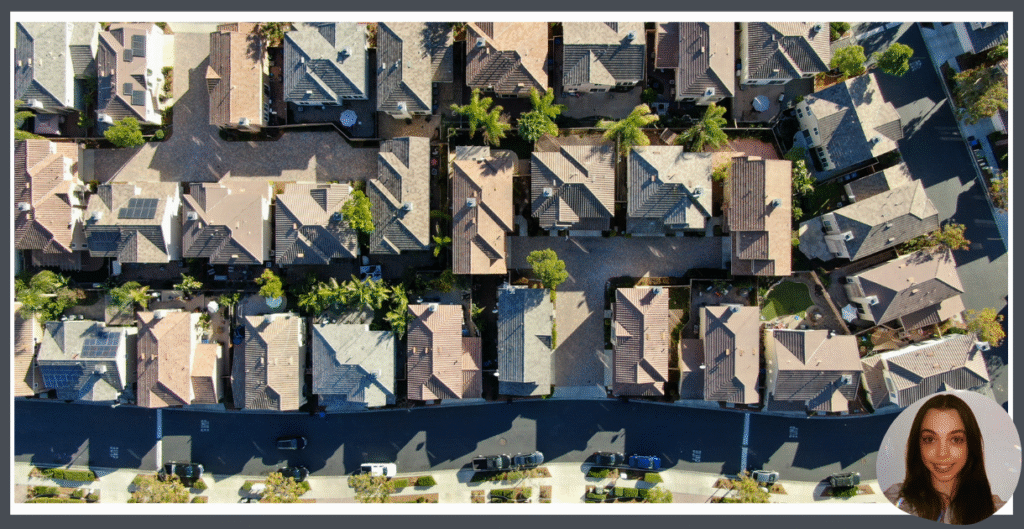
Could the housing crisis solution be a former Lego maker? Intended for small-scale prototypes, from cable clips to draw dividers, 3D printing poses as a strong candidate to revolutionise the housing industry.
With the global housing crisis worsening, innovative workarounds are increasingly needed. In developing nations, rapid urbanisation outpaces construction capabilities, which leaves vulnerable communities without adequate shelter. This issue impacts the following SDGs: 1 (No Poverty), 11 (Sustainable Cities and Communities) and in turn 8 (Decent Work and Economic Growth).
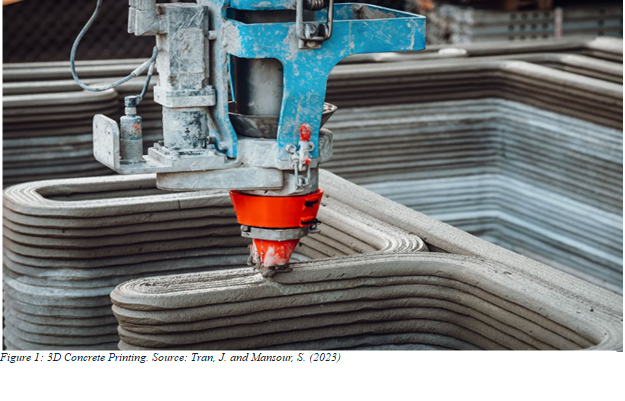
3D-printed housing can mark a major shift on these interlinked issues. Designs are created digitally. Then, printed layer by layer using materials like concrete as the ‘ink’ to the printer. The machine’s nozzles then deposit material along a designated path, to create complete structures (Figure 1). This automated construction method speeds up housing construction; some entire houses printed in as little as a day.
Positive Impact on SDGs
The need for a complex, lengthy list of requirements for tools, specialised equipment and construction workers, as is in traditional housing construction, is eliminated with this innovation. With the lower levels of human input needed, there is reduced human labour in hazardous construction tasks. This greatly reduces a major issue in construction: labour-related injuries, improving site health and safety within this sector.
Due to the lower levels of human input and complex machinery needed, construction time accelerates dramatically. This causes labour prices to drastically drop by an estimated 50-80%, and projects saving a surplus 35-50% in spending as a result. By lowering the costs of constructing a house, the cost of purchasing one is much less. Meaning this technology pushes housing to be more accessible, than ever before.
This additive process is much more green than current contenders. Nearly every input material is used in the printing process. This minimal waste disposal approach promotes SDG 12 (Responsible Consumption and Production) by being efficient with material usage. Some projects go as far as to incorporate common byproduct materials, like recycled tiles and construction waste, within the printer ink, to further reduce any carbon emissions. These eco-designs also encouraged using local resources, meaning instead of transporting materials from a far distance to the site, ones much closer by were incorporated. This shortens the supply chain as transport-related CO2 emissions are lessened.
Negative Impact on SDGs
With the high level of automation that improves efficiency in building these houses, construction jobs are greatly reduced. This proves the technology can be harmful to low-income workers, who comprise a large portion of this sectors workforce. There’s a risk of promoted poverty in the sense of removing employment opportunities from locals. With the increase in poverty, housing is made less financially accessible. This shows that there are some contradictory aspects for SDG 1 and SDG 8 in the role played by automation.
The intricate designs involved in designing some of the structures can pose a challenge to deconstruction and recyclability capabilities. Compared to standard components which are more uniform. The material circularity that was said to be promoted from 3D printing houses is also at risk of being reduced. For unique structures that the printers encourage, there can be long-term waste management challenges. This imposes issues with SDG 11 and 12.
Cement usage, which the technology promotes, has surrounding controversy on the environmental crisis: significant greenhouse gas emissions. Many of the 3D printing housing projects depend on concrete-based materials which is debated to contribute to carbon pollution, challenging SDG 13 (Climate Action).
Although, concrete is used abundantly in the construction industry at the present. With the durable, long-lasting nature, there’s a lot of debate around how green it actually is. A building that can stand in time for many decades, is only required to be made once, compared to a more ‘carbon-friendly’ version that lasts less than half of that. Because concrete offers longevity at a high carbon cost, the environmental impact remains contested.
Case Study: TECLA House, Italy
A recent project in Italy was described as a breakthrough in sustainable 3D printing. TECLA, a pioneer in technology and clay construction, took a page from Invisible Cities’ concept of a forever growing environment. This climate-change-resilient design is mobile and can be easily broken down and then rebuilt.
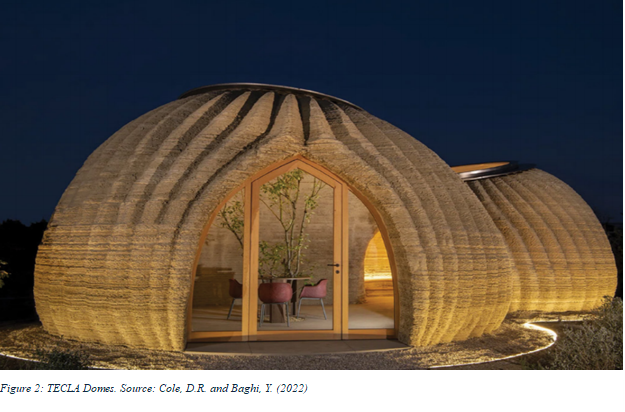
Using locally sourced materials: natural raw earth, rice husks, and water; TECLA’s construction eliminated the need for extracting and transporting materials, a process responsible for almost half of a building’s complete energy contribution. Printed in just over one week, the first full scale prototype used the Crane WASP 3D printer, which has dual synchronised robotic arms. These metal arms exceeded limitations with typical human operated machinery, with 150km of ground being extruded with ease.TECLA housing featured two interconnected dome-shaped components with 350 stacked layers of clay arranged in a rippling pattern (Figure 2).
This is a part of the innovative design that 3D printed housing promotes. The circular rooftop opening allowed natural light to enter throughout the day, improving ventilation and temperature regulation, while enhancing wall stability using natural materials.
The rippling clay layers acted as a heat barrier and provided structural support, resulting in an effective energy-efficient design.
The building is intended to be a low-cost housing solution. Perhaps most impressively, the materials can degrade back into soil at the end of the structure’s life. A true “return to earth” approach that minimises environmental harm.
The TECLA project demonstrates 3D printing encourages the success of natural materials being incorporated into housing construction. With the potential to provoke further unique inspirations for future 3D printed houses. Overall, innovative construction is needed to solve the housing crisis. While challenges around job displacement and carbon intensity debates remain, 3D printing poses as a strong candidate to make housing much more accessible and construction much safer.
References:
[1] Abdalla, H., Fattah, K.P., Abdallah, M. and Tamimi, A.K. (2021) ‘Environmental Footprint and Economics of a Full-Scale 3D-Printed House’, Sustainability, 13(21), p. 11978.
[2] Cole, D.R. and Baghi, Y. (2022) 3D Printed Sustainable Houses for Education [report]. Penrith: Western Sydney University.
[3] Hanifi, H. (2024) ‘Advantages and Challenges of 3D Printing Technology in Sustainable Construction Projects’, Science, engineering & New Technologies, Hamburg, Germany, 11 July. [PDF] Available at: (PDF) Advantages and Challenges of 3D Printing Technology in Sustainable Construction Projects (Accessed: 19 December 2025).
[4] Palazzo, A. (2025) ‘How 3D Printers for Houses Can Reduce CO2 Emissions’, Buildings, 15(4), p. 599.
[5] Prasittisopin, L. (2024) ‘How 3D Printing Technology Makes Cities Smarter: A Review, Thematic Analysis, and Perspectives’, Smart Cities, 7(6), pp. 3458–3488.
[6] Wilson, T.T., Mativenga, P.T. and Marnewick, A.L. (2023) ‘Sustainability of 3D Printing in Infrastructure Development’, Procedia CIRP, 120, pp. 195–200.
[7] Tran, J. and Mansour, S. (2023) ‘Future for 3D Concrete Printing: Sustainability & Standards’. Materials Australia Magazine. SmartCrete CRC. [Online] Available at: : Future for 3D Concrete Printing: Sustainability & Standards – Smartcrete. (Accessed: 20 December 2025).